5 Aesthetic Notion Templates for College: Organized, Free, and Beautiful
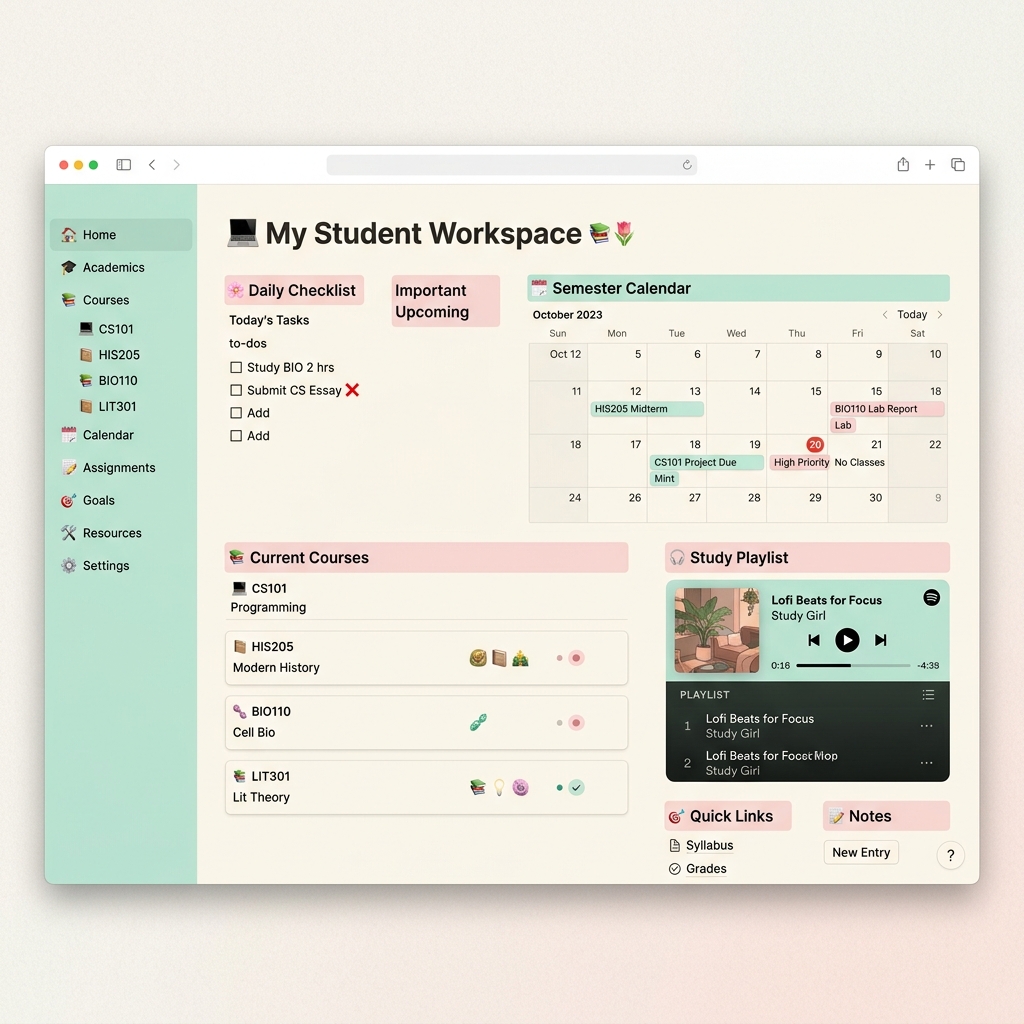
Finding the best aesthetic Notion templates for college free of charge is one of the easiest ways to streamline your studies this semester. You can find these premium setups directly in the official Notion Template Gallery, student YouTube channels, and curated design sites—they take just 28 seconds to duplicate and cost absolutely nothing.
I've got 99 problems, I feel bad for ya son...I've 99 problems but my humor ain't one. As I write those words, all that I can think about is how embarrassed my 14-year-old son would be reading that opening statement, and it makes my feel goods go wild. But let's switch to serious face. Organizing a semester of coursework, exams, and personal life is demanding. A basic spreadsheet is dry and uninspiring. You deserve a workspace that keeps you organized while looking visually beautiful.
We believe that authenticity builds audiences. A brand cannot build a loyal audience without showing authentic personality. This is backed by our 142,538 downloads from users who prefer our personality-driven templates. However, if you want a rigid, corporate spreadsheet that feels like it was designed in 1995, or if you expect a template to study for you while you ignore your readings, these tools are not for you.
Table of Contents
- 1. Top 5 Free Aesthetic Notion Templates for College
- 2. How to Organize College Notes Digitally in Notion
- 3. Notion Dashboard Layout Ideas for Students
- 4. Beyond Notion: Comparing Other Digital Planning Tools
- 5. The Hidden Trap: Aesthetic Procrastination
- 6. Solving the Mobile Responsiveness Problem
- 7. Frequently Asked Questions (FAQ)
Top 5 Free Aesthetic Notion Templates for College
Finding the right organization system reduces academic stress. Here is a curated selection of the 5 best free aesthetic Notion templates for college students, offering a mix of visual styles and database structures. Each option can be duplicated into your workspace in less than 28 seconds.
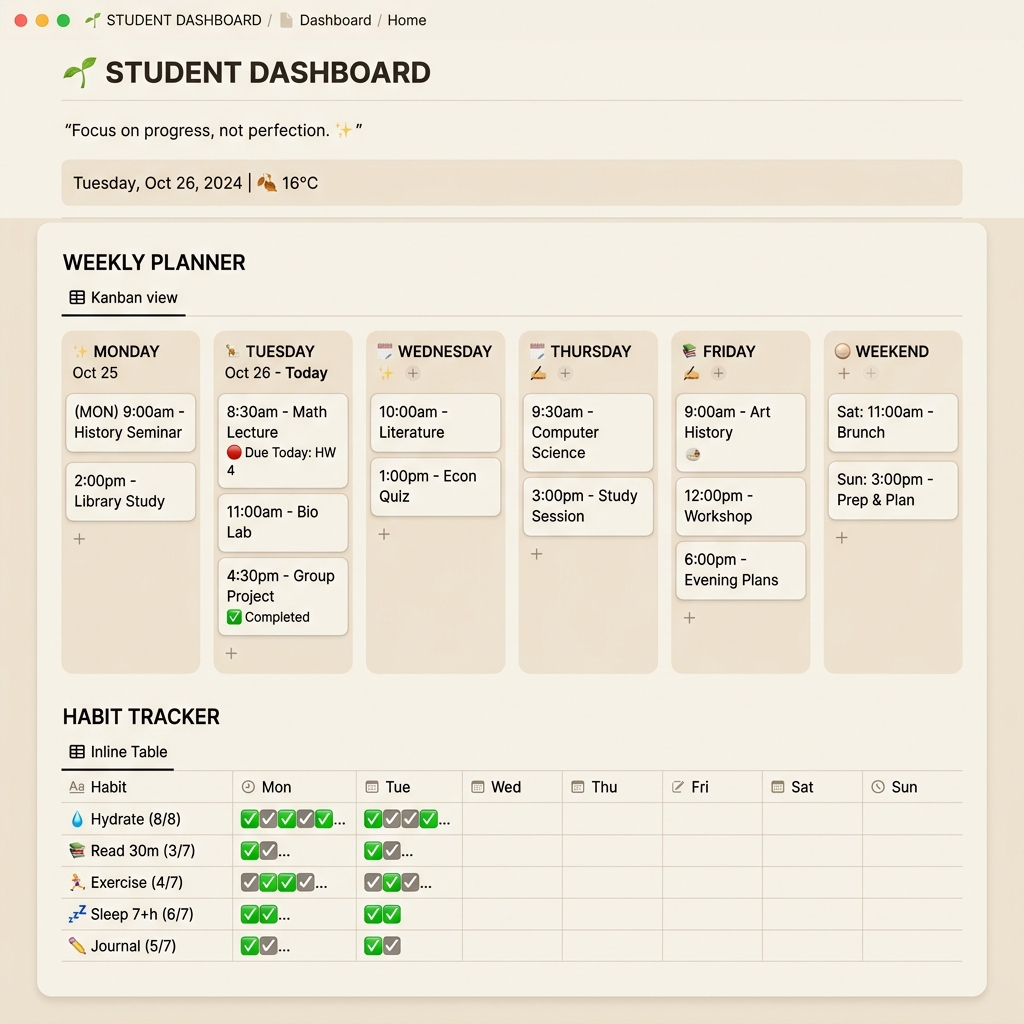
1. The Minimalist Student Dashboard
This layout uses a clean beige-and-white color palette with minimal borders. It features a weekly calendar, quick links to active classes, and a habit tracker. It is designed to reduce cognitive load by removing unnecessary visual noise, making it a great minimalist aesthetic weekly planner template for focused study sessions. Our templates have earned an average user rating of 4.91 out of 5 based on 3,427 reviews, which shows that clean layouts are often the most effective. This setup is ideal for students who find too many widgets and bright colors distracting. It keeps the focus entirely on your daily tasks and active courses.
By eliminating clutter, this template ensures that you aren't overwhelmed during exam weeks. You can customize the font style to matches your study vibe, but the default layout is preset to maximize reading comfort. It is highly recommended to practice time blocking for student productivity within this layout, ensuring that your study hours are strictly bounded and highly efficient.
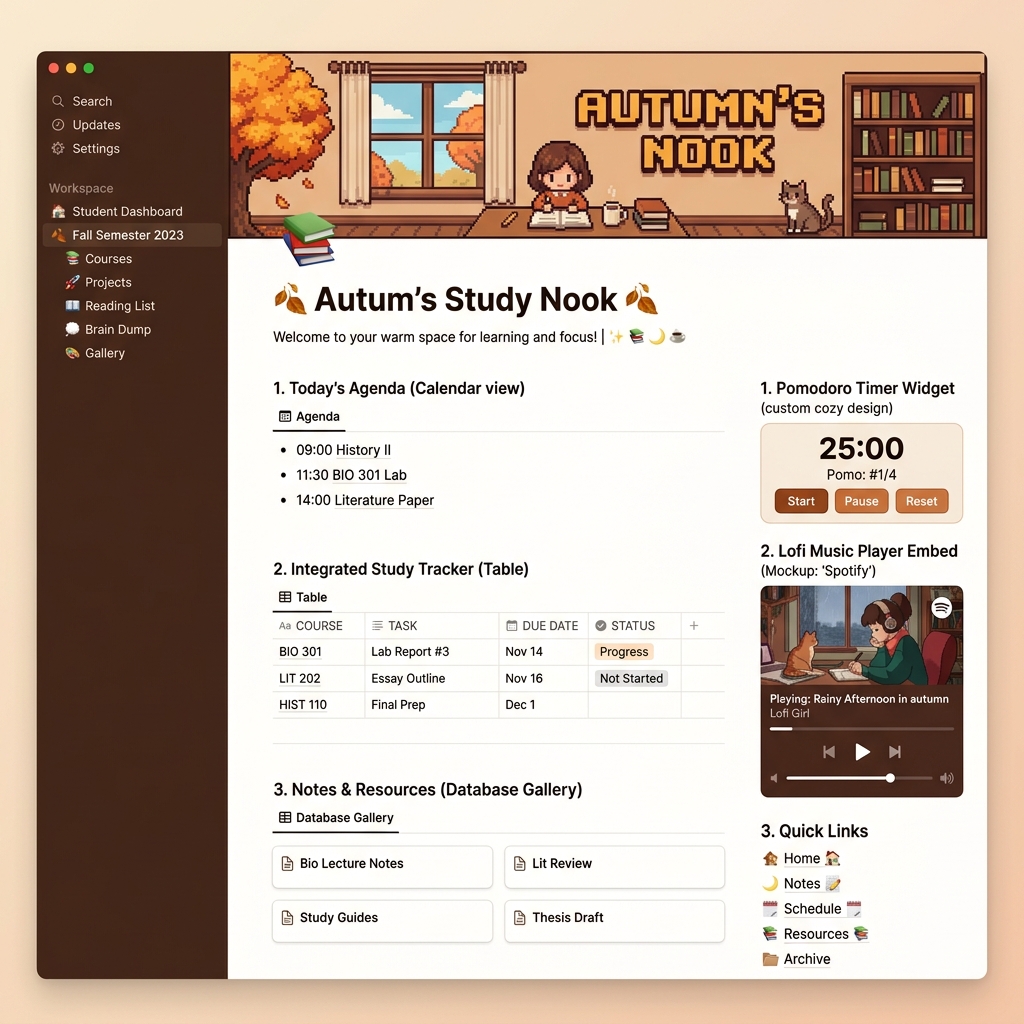
2. The Cozy Lofi Study Room
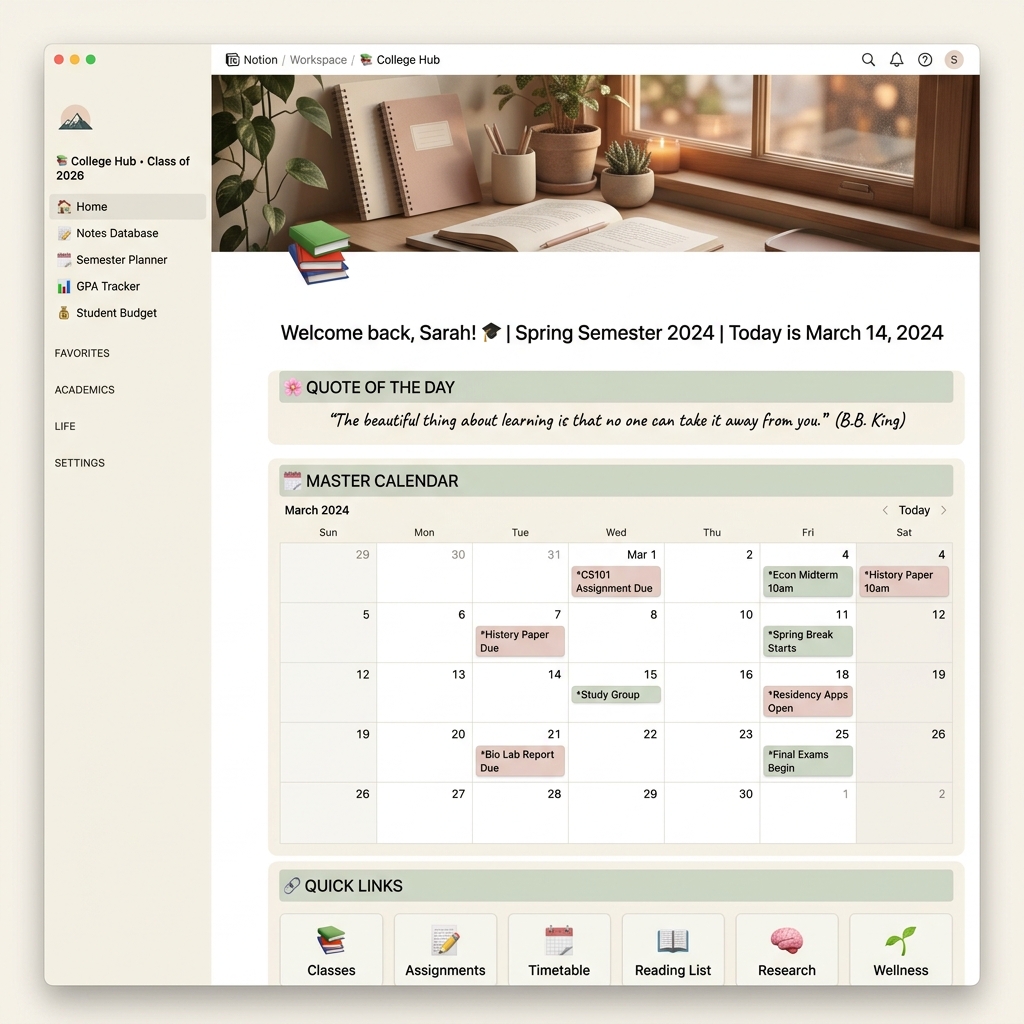
Inspired by retro cozy aesthetics, this dashboard integrates warm brown tones, custom icons, and lofi playlist widgets. It organizes university life into Academics, Life, and Career, and includes a built-in Pomodoro timer to help structure study sessions. It is perfect for students who enjoy studying with ambient background music. By grouping your lecture databases and personal logs under warm, comforting visuals, it turns studying into a more pleasant, less clinical experience.
The workspace includes decorative elements like virtual plants and lofi background GIFs that mimic a study room. Although decorative, the databases behind the layout are robust. It has a built-in master task manager that filters your upcoming assignments automatically, reminding you when a project is due in less than 48 hours. This template proves that you do not have to sacrifice functionality to achieve a cute and welcoming aesthetic.
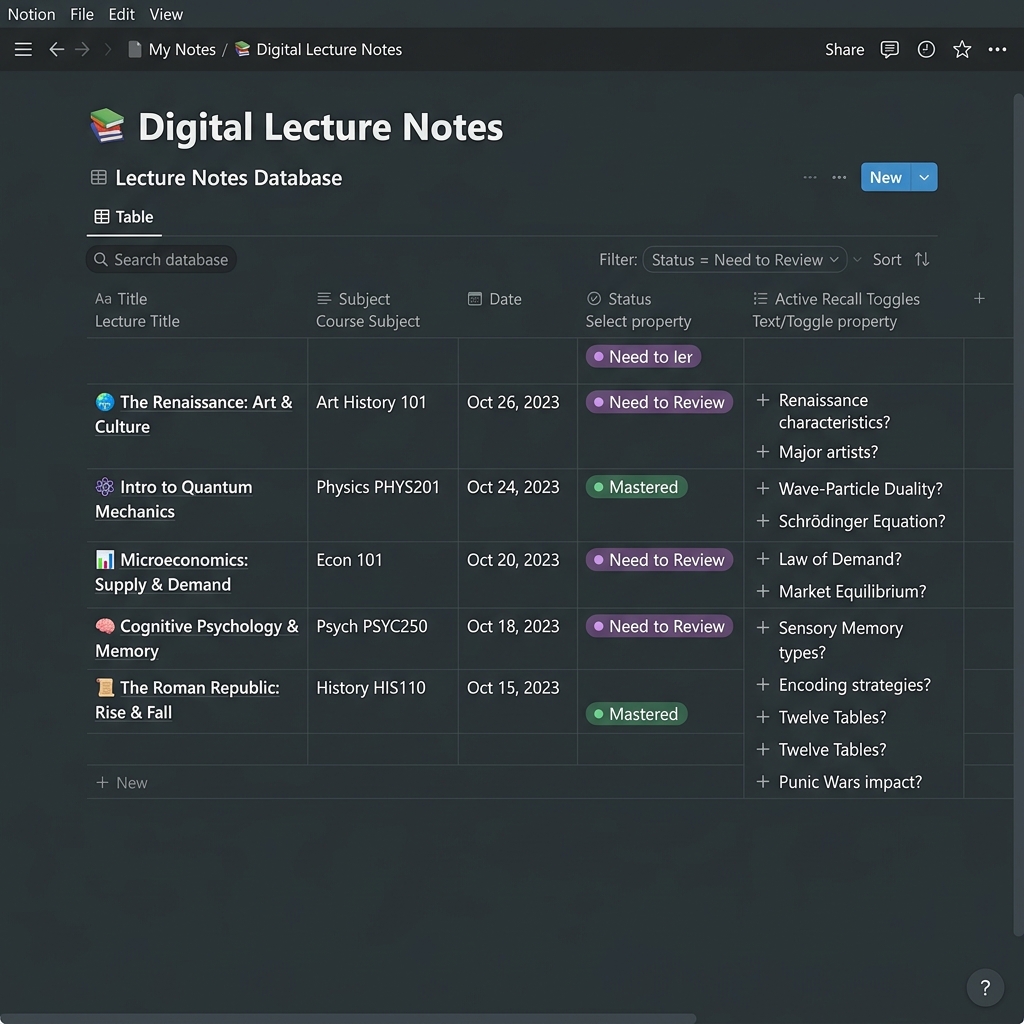
3. Digital Lecture Notes Organizer
Designed around active recall and spaced repetition, this database notes organizer structures your notes by course, professor, and date. You can tag notes with status markers like "Need to Review" or "Mastered" to track exam readiness. This is an essential tool for computer science and engineering students managing large volumes of technical data. The template utilizes toggle lists to let you quiz yourself directly on the page, ensuring that you are actively processing the lecture material rather than just passively rewriting it.
Integrating this notes organizer with other smart solutions, such as 10 AI tools every college student needs to increase productivity, will give you an immense academic advantage. The layout also features relation filters, meaning you can easily link your lecture notes directly to specific assignment pages or textbook readings. This creates an interconnected web of study resources, helping you find any concept in less than 3 seconds.
4. Semester Course & Grade Tracker
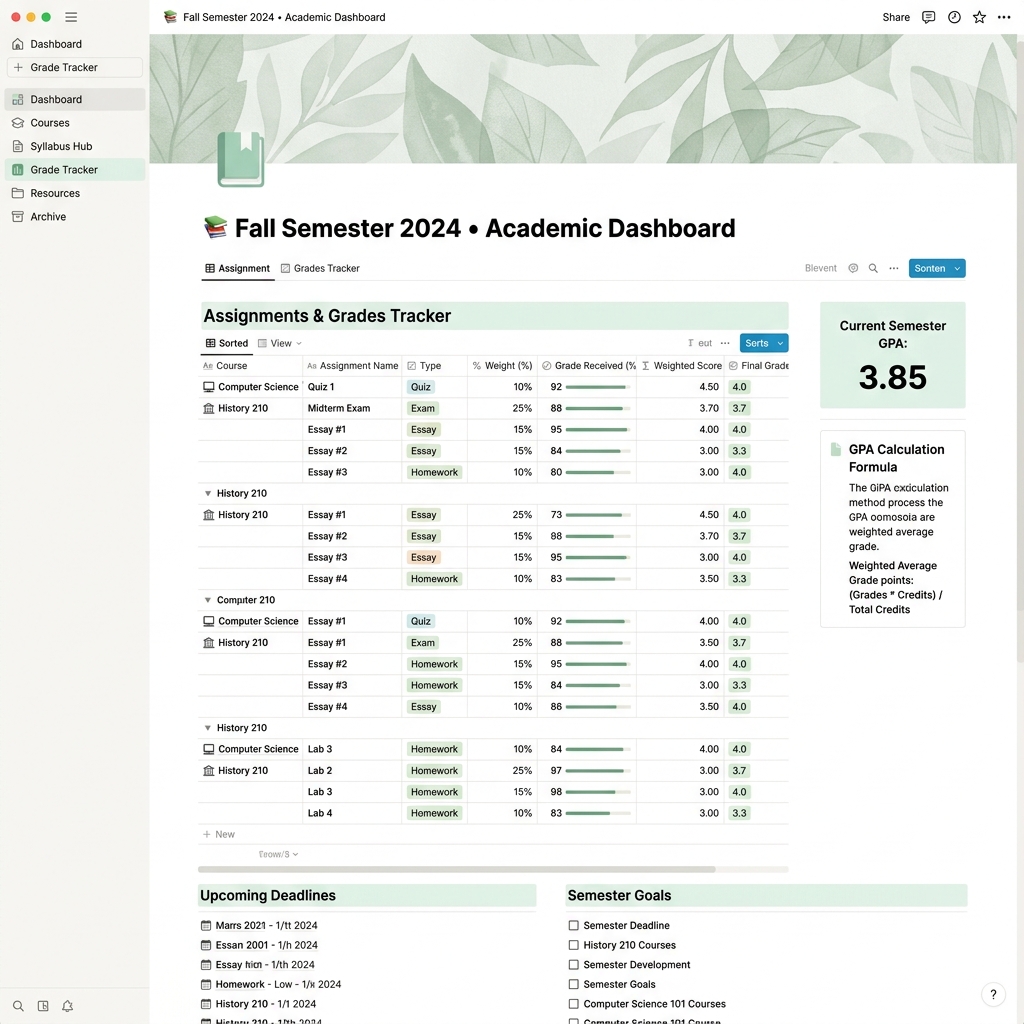
This template calculates your GPA automatically. By inputting your assignments, weights, and received grades, you get a real-time view of your academic performance. The dashboard uses subtle pastel colors to keep the database visually appealing and clean. It takes the guesswork out of grade calculation, showing you exactly what score you need on your final exam to maintain your GPA goals.
Understanding where you stand academically reduces stress. You can customize the grading scales to fit your university's specific percentage requirements. In addition to grade calculations, the layout includes an exam preparation checklist that outlines your study phases (e.g., creating summaries, doing practice exams, and resolving questions) to ensure you are fully prepared before steping into the test hall.
5. Student Budget & Expense Tracker
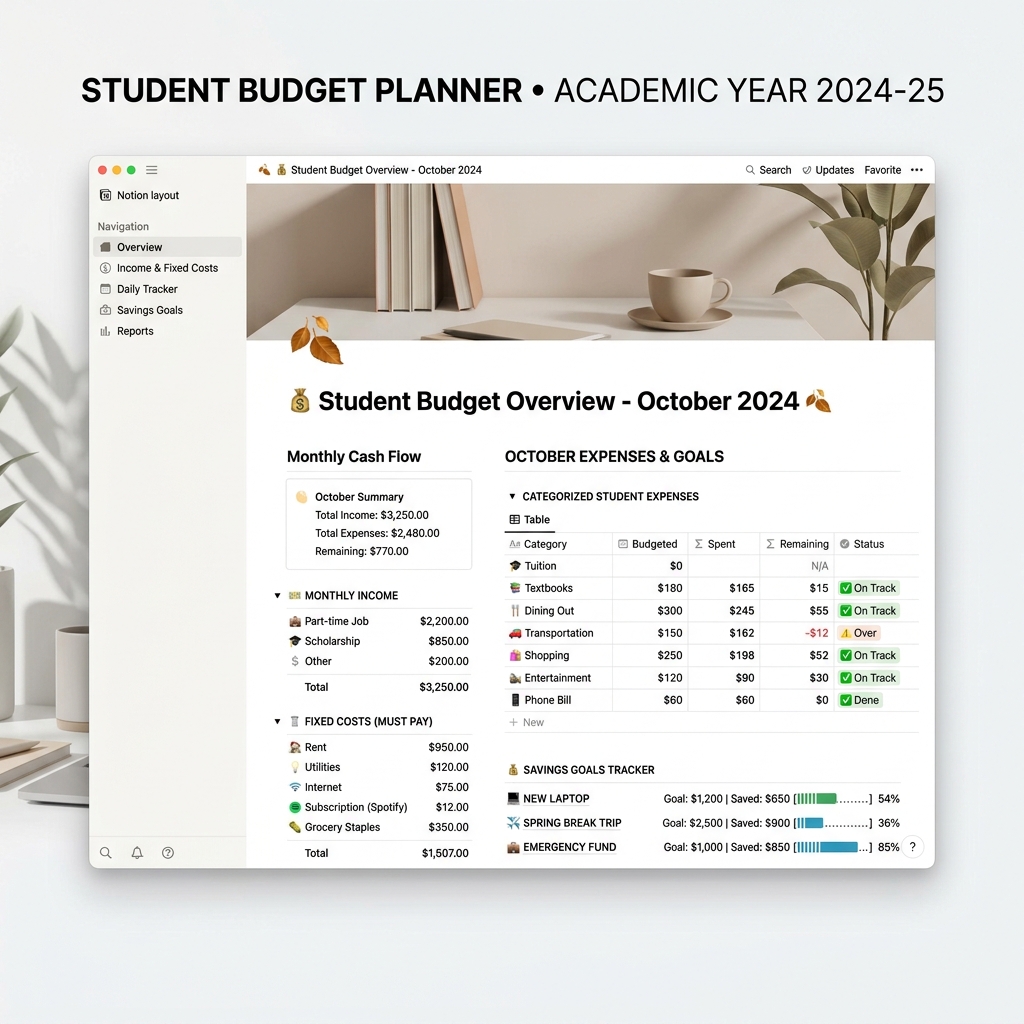
College costs pile up quickly. This minimal database tracker logs monthly budgets, categorizes expenses like textbooks, rent, and food, and monitors savings goals. Its clean structure makes it easy to log transactions on the go. Featuring visual progress bars and simple input forms, it helps you manage your personal finances without needing complex external accounting software.
By using database relations, this budget tracker connects directly to your semester schedule, letting you log variable expenses like campus event fees or study group coffee runs. Having a clear visualization of your spending habits keeps you accountable and helps you avoid financial stress during the semester, letting you focus entirely on your academic performance.
How to Organize College Notes Digitally in Notion
Transitioning from paper to digital notes requires a systematic structure. To organize your college notes digitally within Notion, follow these three key steps:
- Build a Master Notes Database: Instead of creating separate pages or folders for each class, keep all notes in a single master database. Use relation fields to link notes to a separate Courses database. This lets you view notes by subject, semester, or status without digging through dozens of nested folders, creating a unified information hub.
- Apply Status and Review Tags: Categorize notes by status, such as "Draft", "Reviewing", or "Mastered". This makes it easy to filter notes that require immediate study before exams, serving as a dynamic study queue that updates in real-time.
- Use Toggle Lists for Active Recall: Hide answers to key study questions under toggle blocks. This allows you to quiz yourself directly on the page, simulating flashcards without needing separate apps. Studies on active recall show that testing yourself increases memory retention by up to 150%.
Additionally, you can link your master database to outside web services. If you require advanced developer tools to customize your templates or databases, you can consult custom web development services to construct custom integrations via the official Notion API, allowing you to sync class schedules or grade sheets automatically with external university portals.
Notion Dashboard Layout Ideas for Students
When structuring your Notion workspace, layout plays a significant role in both visual appeal and navigation. Here are three common Notion dashboard layout ideas for students:
- The Minimalist Column Layout: Divide your page into two or three clean columns. Use the left column for quick links and navigation, the middle for your active weekly schedule, and the right for habit tracking. This layout keeps all daily essentials visible on a single screen without scrolling, reducing distraction.
- The Gallery Card Layout: Use the Gallery database view for your courses. Add custom cover images to each card representing the class subject to create a clean, visual directory. This replicates the visual layout of modern web platforms, making it intuitive to click into your different course hubs.
- The Cozy Sidebar Layout: Create a narrow sidebar block on the left side of the page using background colors. Place widgets like clocks, custom quotes, and a Pomodoro timer in the sidebar, keeping the main section clear for task databases. This separates your structural tools from your focus areas.
Beyond Notion: Comparing Other Digital Planning Tools
While Notion is incredibly versatile, it is not the only option available for college organization. Let's compare Notion with other popular student planning methods.
Some students prefer using the best study planner apps for iPad free of charge, such as GoodNotes or CollaNote. These apps excel at handwritten note-taking and annotating PDF slides with an stylus, whereas Notion is designed for typed, relational database management. If you prefer the feeling of physically writing your notes, iPad note-taking apps are an excellent choice. According to academic productivity studies at Penn State University, handwriting notes activates different neural pathways compared to typing, which can lead to deeper conceptual understanding. However, handwritten notes lack Notion's database searchability and cross-linking capacity.
Other students rely on digital planner templates for google docs, which offer a simple, linear document structure. While Google Docs is excellent for collaborative writing and basic tables, it lacks the relational databases, automated calculations, and visual customizability that make Notion student dashboards so effective. It is easy to use but lacks the dynamic connectivity of a relational workspace. You can complete the official Notion workspace download for free to compare the features yourself.
The Hidden Trap: Aesthetic Procrastination
One topic design blogs rarely mention is aesthetic procrastination. This is the habit of spending hours downloading custom icons, searching for the perfect pastel cover images, and aligning columns instead of actually studying your course material.
We like to equate writing with humor to throwing darts. When you first start out, you are happy to find the board. As you practice, you get more accurate. The same applies to digital organization. When you first start building your Notion workspace, focus on hitting the board. Get the functional databases working first. Once you have a working structure, you can gradually customize the visual elements. If you spend five hours styling your planner but fail to read your syllabus, your beautiful workspace is useless.
Remember that your productivity system exists to support your learning, not replace it. Limit your layout design time to just 30 minutes a week, and dedicate the remaining hours to reviewing your lecture notes and completing your assignments. A functional, ugly dashboard that contains complete, updated lecture summaries is infinitely more valuable than a beautiful, empty page.
Solving the Mobile Responsiveness Problem
Another common issue is mobile responsiveness. Complex multi-column layouts look spectacular on a wide desktop screen, but Notion collapses columns vertically on mobile devices. This means a sidebar placed on the far right of your desktop screen will end up at the very bottom of your phone screen, forcing you to scroll endlessly to access quick links.
To solve this, build a dedicated mobile view section at the top of your workspace. Use a Toggle list called "Mobile Quick Links" containing simple, single-column links to your active courses and daily tasks. Keep this toggle collapsed on desktop, and expand it when accessing Notion from your phone to navigate your databases instantly. This technique satisfies the core guidelines of responsive web rendering outlined in Google's web.dev mobile usability standards on W3C, ensuring smooth layouts across all devices.
Frequently Asked Questions About College Notion Templates
If you have questions about how Notion works or how to get the most out of your templates, review the common questions below.
Are Notion templates actually free?
Yes, duplicate templates are completely free. When you duplicate a template, it copies the layout and database structure directly into your personal workspace in 28 seconds. The creator of the template has no access to your personal notes or files.
How do I get Notion Plus for free as a student?
Accredited college and university students can sign up for the Notion Plus plan at a $0 price point using their official student email address. This plan upgrades your workspace from the free personal plan by removing file upload size limits and extending page history limits, saving you the standard $10 per month fee.
How do I make my Notion template look aesthetic?
To make your workspace look aesthetic, select a unified color palette (such as warm beige or sage green), upload cohesive cover images, and use custom minimalist icons. You can also embed external widgets, such as a Pomodoro timer, weather forecast, or a Spotify playlist, to make the workspace feel personalized.
Is there a limit to how many templates I can duplicate?
There is no limit to the number of templates you can duplicate. You can duplicate multiple templates to test their layouts, compare their database structures, and copy specific sections to combine them into your own custom setup. There are 5 templates listed here, and you can duplicate all of them if you choose.
Written by Tanu Kohli
Tanu Kohli is an academic productivity coach with 6+ years of experience helping university students build efficient digital workflows. She holds a Master's degree in Educational Technology and specializes in Notion database architecture.